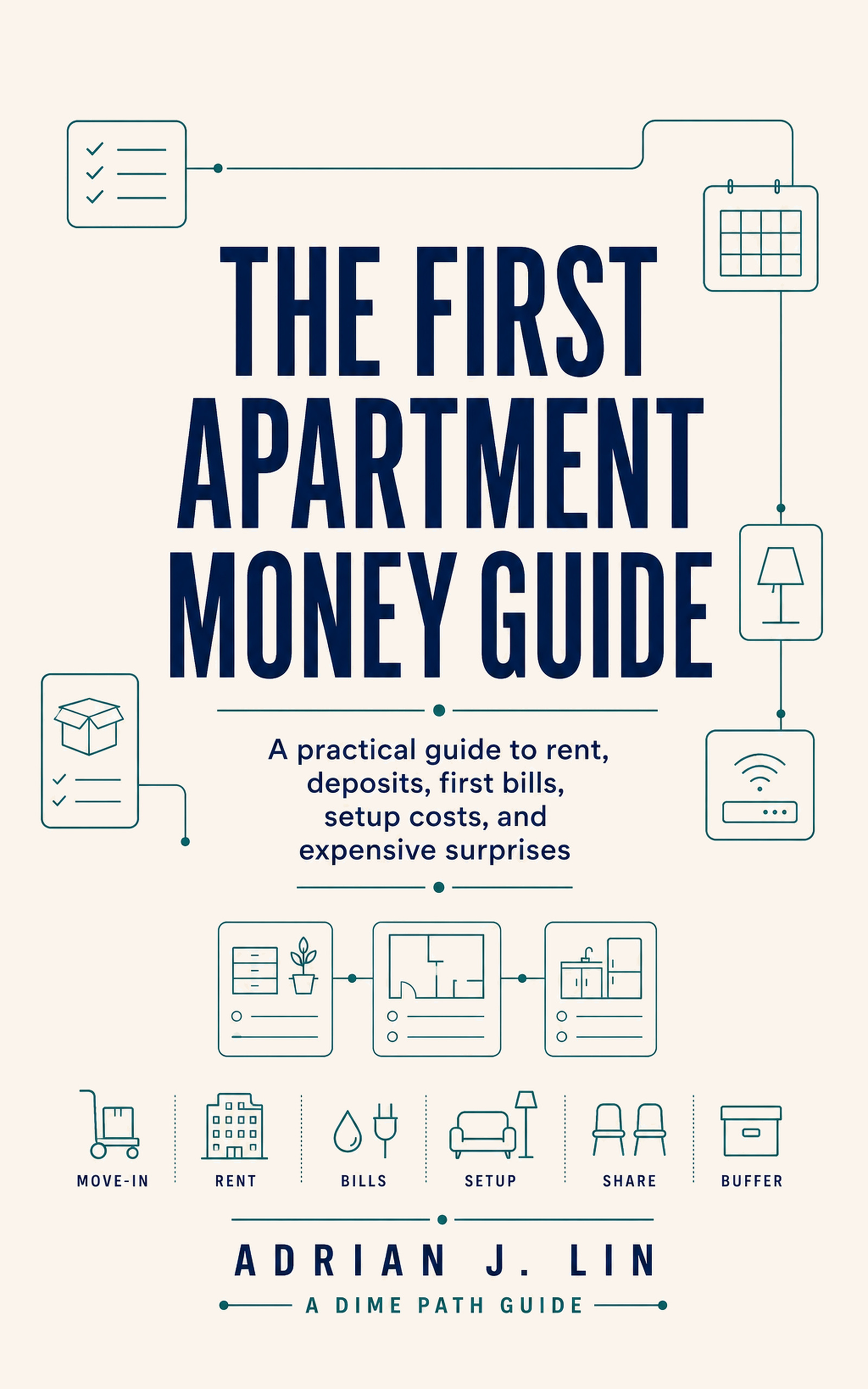
The First Apartment Money Guide
A practical guide to rent, deposits, first bills, setup costs, and expensive surprises
By Adrian J. Lin · A Dime Path guide
About This Book
Moving into a first apartment almost always costs more than the rent — and the surprises tend to land all at once. The First Apartment Money Guide is a calm, practical workbook for planning that money side before you get the keys: total move-in cash, deposits and fees as cost categories, first bills and when they actually come due, utilities setup, furnishing on a budget, roommate and shared-cost logistics, a simple monthly budget, and the common expensive surprises. You fill in your own numbers on the worksheets. It is educational, no-hype, and shame-free money planning — not legal, tax, insurance, or financial advice, with no affordability verdicts and no rigid rent-percentage rules. The book is complete on its own; a companion page offers optional printable tools.
Who Is This Book For?
First-time renters and anyone planning a first apartment or move-out — students, recent grads, and young adults who want a calm way to plan move-in cash, first bills, setup costs, and shared expenses before they sign.
What You'll Learn
- Estimate the total cash you need before move-in — deposits, first month, fees, and setup
- Plan for first bills and the timing of when money actually goes out
- Set up utilities and track setup costs, deposits, and first due dates
- Compare apartments by total monthly cost, not just rent
- Sort out roommate and shared-cost money logistics before you move in
- Build a first-month budget and a small buffer for surprises
Looking for free, printable companion resources? See the companion resources for The First Apartment Money Guide →
This book and site are for general education and information only — not financial, legal, tax, insurance, or real-estate advice, and not a substitute for a qualified professional who knows your situation. It does not cover your legal rights as a renter; deposit rules, lease terms, and costs vary by location. Check your lease, use official sources, and consult a qualified local professional for your situation.